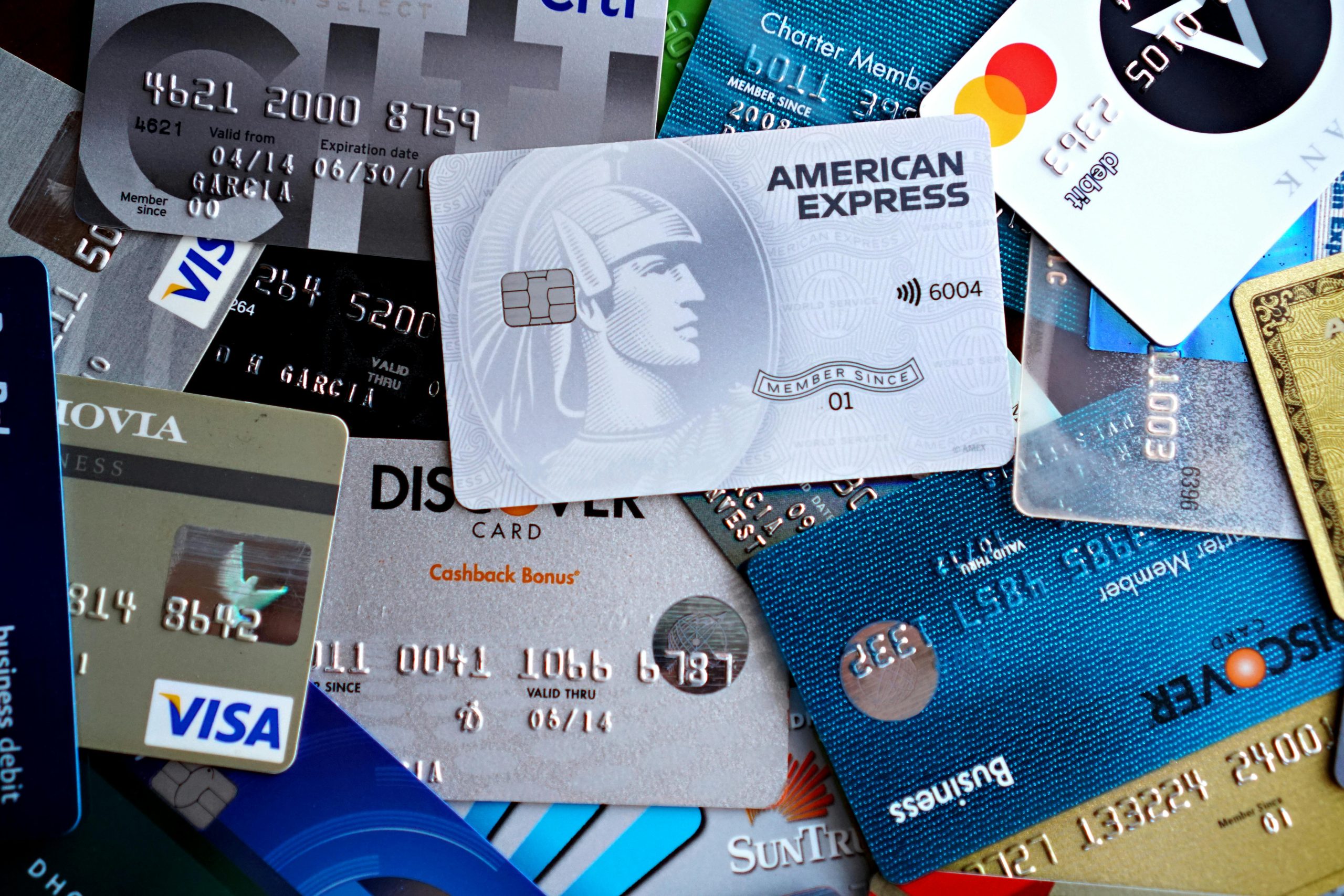
What happens when you stop paying credit cards: Immediate fees and interest charges
Miss the due-date by even one day and the card issuer slaps on a late-fee—typically $30–$40 the first time, then up to $41 for repeat offenses within six billing cycles. At the same moment your 18 % APR can jump to the 29.99 % penalty rate, which is applied to the existing balance the moment the grace period ends. In real numbers, a $5 000 balance that cost $75 a month in interest suddenly balloons to $125. Those two hits—fee plus higher interest—make the next minimum payment harder to cover, so the cycle repeats. Within 60 days you can owe an extra $150 in fees and $100 in “surprise” interest, money you never borrowed but must now repay. Treat these first 30 days as the golden window: even a partial payment often keeps the penalty rate from kicking in, so send whatever you can before the statement closes.
Credit score damage and reporting to bureaus
Payment history is 35 % of your FICO score. A single 30-day-late mark can shave 100 points off a 680 score and up to 150 off someone above 750. The card issuer reports the delinquency to Equifax, Experian and TransUnion on the second statement after you miss the due-date, so the damage shows up fast. Once posted, the negative mark stays for seven years, although its impact fades if you restart on-time payments. The lower score raises the interest rate you’ll pay on car loans, personal loans and even new cell-phone contracts. To quantify: on a 60-month $25 000 auto loan, a 100-point drop can add $5 000 in interest. Checking your score through free sites like Credit Karma lets you see the exact day the late payment registers, giving you a psychological nudge to cure the past-due amount before the next reporting cycle.
Account closure and loss of credit access
After 90 days of non-payment most issuers “charge-off” the debt internally and simultaneously close the account, erasing the available credit from your utilization ratio. If you had a $10 000 limit on that card and $2 000 balances elsewhere, your utilization leaps from, say, 10 % to 25 % overnight—another 20-point score drop. Closed positive accounts eventually fall off your report, shortening your average age of credit. More painful in daily life: you lose the card itself. Recurring charges such as Spotify, ride-share apps or cloud storage fail, sometimes triggering their own $35 returned-payment fees. Emergency access to credit disappears right when you may need it most. One workaround: ask the issuer for a “hardship closure” instead of a default closure; it still hurts, but the notation is slightly softer and sometimes keeps the account age intact.
Increased debt burden through compounding interest
Credit-card interest compounds daily once you lose the grace period. On a $7 000 balance at 29.99 % APR, roughly $5.75 in interest is added every single day, so the balance grows $172 a month even if you never swipe the card again. After six months you owe about $8 100; after a year you’re near $9 400—an extra $2 400 for the privilege of not paying. The math accelerates if you keep using the card for essentials like groceries. Each new purchase starts accruing interest immediately, because there is no grace period when you’re delinquent. The only way to stop the snowball is to bring the account fully current; until then, every payment you make covers interest first, principal second. Visualize the damage with an online compound-interest calculator and you’ll feel the urgency to break the cycle before the balance becomes unrecognizable.
What happens when you stop paying credit cards: Onset of collection calls and harassment
Once the payment is 30 days late, the issuer’s internal collectors start calling, usually between 8 a.m. and 9 p.m. local time. By day 60 the frequency can hit three times a day; after the charge-off at day 180 the account is often sold to a third-party agency that adds robo-texts and emails. Federal law (FDCPA) lets you demand all contact in writing, but you must send a written “cease communication” letter. Until then, expect scripted language: “We need a good-faith payment today.” Record the date, time and caller; harassment—like threats of arrest—violates federal rules and can be reported to the CFPB in under 10 minutes online. Practical tip: pick up once, explain you’re documenting income and expenses, and set a firm date—say, two weeks out—for your next call. Collectors work on commission; giving them a timeline, even if you can’t pay, often reduces the daily phone assault.
Impact on future credit applications and loan approvals
Lenders look at both your score and your raw credit report. A recent late payment flagged “currently past due” is a red flag that can override an otherwise decent score. Mortgage underwriters use automated systems that decline applicants with any delinquent account in the last 12 months, regardless of score. Personal-loan companies such as SoFi or Marcus openly state “no recent delinquencies” as a condition for their best 7 % APR offers. Even if you’re approved, risk-based pricing pushes your rate higher: a $20 000 five-year loan at 12 % instead of 7 % costs an extra $3 000 in interest. The workaround is to bring all cards current before submitting any application; once the status changes to “paid – was 30 days late” the automated systems treat it far more gently, and your odds of approval jump overnight.
Effects on daily financial life, such as higher insurance premiums
In most U.S. states insurers use a credit-based insurance score to price auto and homeowner policies. A 100-point drop from missed card payments can move you from “good” to “poor” tier, raising premiums by 30–50 %. For example, the average six-month car premium leaps from $720 to $1 020—an extra $600 a year for the same coverage. Utility companies and cell-phone carriers may demand security deposits of $200–$400 if your score tanks below 600. Landlords increasingly charge higher pet deposits or first-month rent to applicants with recent delinquencies. These hidden costs make the true price of skipping a $35 minimum card payment closer to $1 000 a year. The fix: shop for insurance again once you rebuild your score; carriers re-rate every renewal, so savings appear faster than you think.
Emotional and psychological stress from financial pressure
A 2022 study by the American Psychological Association shows that 67 % of adults feel “significant anxiety” about unpaid consumer debt, ranking it above work or family stress. Night-time rumination—calculating how to juggle rent, food and the looming card bill—triggers insomnia, which in turn lowers work performance and jeopardizes income. Shame keeps many people from confiding in friends, amplifying isolation. Simple tactics help: schedule a 10-minute “worry appointment” each day so intrusive thoughts don’t own your entire evening. Free support groups like those hosted by the National Foundation for Credit Counseling (NFCC) give real-life success stories that counter hopeless feelings. Exercise, even a brisk 20-minute walk, lowers cortisol levels and can break the paralysis that prevents you from opening mail or answering calls—two actions essential to solving the debt itself.
Risk of co-signer or joint account holder involvement
If a parent or partner co-signed your card, the issuer will pursue them the moment you miss a payment. The late mark appears on both credit files, so Mom’s 820 score can plunge alongside yours. Worse, collectors can garnish the co-signer’s wages or bank account once they secure a judgment. Joint account holders—common among spouses—are equally liable for the full balance, not just “half.” The relationship strain can be severe: 30 % of co-signers end up paying the debt themselves, and resentment lingers. Communication is key: text or email the co-signer before the due-date if you foresee trouble; many will make the minimum payment to protect their own credit, then work out a private repayment plan with you. Removing a co-signer is rarely possible after delinquency, so address the issue early while the account is still current.
What happens when you stop paying credit cards: Options to negotiate payment plans
Issuers would rather collect something than write off everything, so they offer hardship or “workout” programs once you’re 30–90 days late. Typical terms include 0 % interest for 60 months on the existing balance in exchange for closing the card and setting up autopay. A $7 000 balance then costs only $117 a month—often half the normal minimum. You must prove hardship: a layoff letter, medical bills or unemployment claim number. Call the number on the back of the card, ask for “loss mitigation,” and have your budget ready—know exactly how much you can send and on which day of the month. Get the offer in writing before the first payment; verbal promises disappear when the call ends. These plans stop late-fee bleeding and prevent charge-off, giving you a clear finish line while protecting your credit from further scars.
Difficulty in renting housing or securing employment
Landlords in competitive markets routinely pull credit reports; a recent 60-day late can push you below 600, placing you behind applicants with clean files. Property managers may then ask for an extra month’s rent up front or a qualified guarantor—hard if your support network is also cash-strapped. Some employers, especially in banking or armored-car services, check credit as part of background screening. The rationale: high delinquency is correlated with on-the-job fraud risk. While they need your written permission, saying “no” ends the interview. Bring a short explanation letter to interviews: “I became delinquent during a layoff, but I’ve since enrolled in a payment plan and reduced the balance 30 %.” Demonstrating action turns a red flag into a story of responsibility, improving your odds of landing the job or lease you need to stabilize income and pay off the card.
Steps to rebuild credit after stopping payments
Rebuilding starts the day you bring every account current; until then, new positive data can’t outweigh the fresh red ink. Next, open a secured card with a $200–$300 deposit; use it for one small recurring charge—Netflix, for example—and pay in full each month. After 6–12 months of perfect history the issuer often refunds the deposit and upgrades you to an unsecured product. Keep total utilization below 10 % across all cards; if your secured limit is $300, never let the statement show more than $30. Ask a family member to add you as an authorized user on their old, spotless account; the backdated positive history can add 20–40 points quickly. Finally, pull your free credit reports at AnnualCreditReport.com and dispute any errors; one misreported late payment removal can boost your score 50 points overnight, accelerating your return to mainstream credit.
What happens when you stop paying credit cards: Long-term financial health consequences
Lost compound growth is the silent cost. Every dollar you divert to penalty interest is a dollar that can’t invest in a 401(k). Paying $200 a month in card interest for five years equals $12 000 that could have become $17 000 in a low-cost index fund at 7 % annual return. High interest also crowds out emergency savings; without a cushion, the next car repair goes back on plastic, recreating the cycle. Over a lifetime, a lower credit score can add $200 000 in extra interest on mortgages and auto loans, according to NerdWallet data. The psychological drag extends to career choices: people avoid entrepreneurial risk or relocation because damaged credit limits access to start-up capital. Fixing the mess early frees mental bandwidth for income-boosting moves—negotiating a raise, freelancing on the side—turning the debt spiral into an upward financial trajectory.
Alternatives to stopping payments, like debt consolidation
Before you throw in the towel, price a fixed-rate debt-consolidation loan. Online lenders such as Upstart or LightStream approve borrowers with scores as low as 580, offering APRs from 10–18 %—half the penalty rate on cards. On $10 000 of card debt at 29 %, minimum payments stretch 27 years and cost $16 000 in interest; a five-year consolidation loan at 12 % costs $3 300 in interest and has a defined end date. If your score is too bruised, nonprofit credit-counseling agencies can enroll you in a Debt Management Plan (DMP) that cuts rates to 0–8 % without a new loan. You send one monthly payment to the agency, which pays each card, and the plan appears as “paying through counselor,” a neutral mark. Both options keep accounts open and reporting positive, sparing your score the multi-year punishment of charge-offs and collections.
What happens when you stop paying credit cards: Key takeaways for proactive management
The single best move is to act before day 30: pay the minimum, even if you must sell something or drive Uber for a weekend. If you’re already late, triple the communication—call the issuer, send hardship documents, and open every envelope. Track your score monthly; watching it climb 10 points when a plan starts is powerful motivation. Automate at least the new reduced payment so human error can’t restart the nightmare. Finally, budget for an emergency fund while you dig out; even $20 a week in a high-yield savings account builds a cushion that prevents the next crisis from landing on a credit card. Remember, a late payment is a bruise, not a tattoo—the faster you treat it, the sooner it fades.